19th June, 2018
BACKGROUND: “Life is uncertain, the future unknown. This is neither good, nor bad. It just is like gravity. Yet the task remains: how to master our own fate, even so.” At times we wonder how some people or organizations thrive when time becomes uncertain! Do they depend upon horoscopes? Do they blame everything on luck? After reading this book, I no longer think it that way. These highly successful people or organizations merely do not fear uncertainties. They rather embrace it, and thrive despite it. Instead of blaming their situation on things supernatural, the movement of planets and stars, luck and horoscopes; these people rather choose to become and remain great. For them pursuing greatness is not a matter of destiny but rather a choice. Do we, as ordinary people, have all what it takes to get extraordinary results, become and remain great? Or in the words of the author, can we become 10Xers? The answer is left for the exploration by the reader.
ABOUT THE BOOK: The book GREAT BY CHOICE written by Jim Collins is an enrapturing and a thought provoking resource. It is a book that tries to explore if uncertainties really bind us? Through case studies of people (called 10Xers) and organizations having endured and prevailed phenomenal adversities, the book answers how uncertainties, need not have any effect upon our trails if we, are disciplined, make right choices, remain alert and have the requisite ambition. The book is quick-read and easy-retain. It is a week reading for an average reader who reads two hours a day, in my opinion. The book has approximately 300 pages and seven chapters. The content can be segregated into two parts essentially. The first part having the first six chapters discusses attributes of thriving in uncertainty: Fanatic Discipline, Empirical Creativity, Productive Paranoia and Level 5 Ambition.The second part with the last chapter explores what or rather who the luck is and why it’s not as important as a return on the luck. More like in the author’s other books; the headings of chapters have been written in such a way that it is easy to remember the content given in the chapter. In the similar way to make reading experience enriching, valuable individual’s memoirs are presented along with hardcore empirical data, validating the author’s hypothesis (or vice versa).
ABOUT THE AUTHOR: James C. “Jim” Collins is a guide and ateacher. He is a best seller and renowned author of growth and sustainability of an organization. He has written numerous best-selling books on personal-organizational growth and management. Some of his other notable books are: Built to Last, Good to Great and How the Mighty Fall.
INTERPRETATION: In order to withstand uncertainties and thrive upon it, a person should be able to inculcate certain qualities. As an organization is a reflection of people, these qualities would remain true for firms and companies as well. These qualities are (1) Fanatic Discipline (2) Empirical Creativity (3) Productive Paranoia and (5) Level 5 Ambition (shown in figure 1).
(1) Fanatic Discipline: To put it simple, discipline is consistency. As written by the author, “True discipline requires mental independence and an ability to remain consistent in the face of herd instinct and social pressures. Fanatic discipline often means being a non conformist”. As a practice, fanatic discipline may also be understood as 20 Mile March. Suppose there are two teams A and B for a race. In total 200 miles have to be completed. The weather is unpredictable. Sometimes it becomes hot like a desert and sometimes gets cold like Artic. Team A does not have a fixed schedule of marching. When the weather is comfortable they over-march to exhaustion and when the weather is harsh, they do not march at all. In total it takes them two weeks to complete the race. Team B, on the other hand marches 20 miles a day, every single day. They march 20 miles only even when the weather is comfortable as well as harsh. They never indulge in under-marching or over-marching. They simply march till the point that’s decided by them already. Nothing less, and nothing more – simply 20 miles per day. In this way it covers the distance in 10 days and wins the game. Team B wins. This 20 Mile March is nothing but fanatic discipline. Contrary to the conventional saying that in the times uncertain, it is better to remain flexible, the findings of the research in this book suggests firms (or individuals) which have thrived in the times of uncertainty have been the ones which have shown fanatic discipline. To put it in the words of the author, “The 20 Mile March imposes order amidst disorder, consistency amidst swirling inconsistency. But it works only if you actually achieve your march year after year. If you set 20 Mile March and then fail to achieve it – or worse, abandon fanatic discipline altogether – you may well get crushed by events”. This is important to understand as it separates 10Xers from others.
(2) Empirical Creativity: It is taking calculated risks. Creativity, one and all is not the key to transformation into great. Creativity should be supplanted with discipline. Creativity (simply innovation) to a certain threshold level is enough for individuals and organizations. The question is how do we know what is our threshold level of innovation? This is done by being empirically creative (taking calculated risks). In this book it is also referred as ‘First fire bullets and then fire cannonballs’. What is a bullet? A test aimed at learning what’s working best for a person (or organizations). It is those decisions which involve low cost, low risk and lesser distraction (from main goals). First fire bullets and then fire cannonballs means, that before taking a very big decision, one should test its validity by taking smaller decisions involving lower costs, lower risks and lesser distractions. If through the series of smaller decisions, the validity of bigger (to be taken) decisions becomes correct, then there is no harm in taking a bigger decision, and vice versa. The process of taking smaller decisions initially can be understood as calibrating a cannonball. Thus, before firing a cannonball, a bullet should be fired. That’s calibration. As the author also cautions, “Firing uncalibrated cannonball that succeeds, generating a huge windfall, can be even more dangerous than a failed cannonball. Keep in mind the danger of achieving good outcomes from bad process. Good process doesn’t guarantee good outcomes, and bad process doesn’t guarantee bad outcomes, but good outcomes with bad process – firing uncalibrated cannonballs that just happen to succeed – reinforces bad process and can lead to firing more uncalibrated cannonballs”, eventually leading to disaster. 10Xers understand this, consciously or unconsciously, while others do not.
(3) Productive Paranoia: It is being vigilant. It is a process that involves three aspects:
(3.1) Building Cash Reserves: A process of securing enough resources to sustain in times of scarcity. In Financial Theory, it is known that leaders who hoard cash/resources are irresponsible for capital deployment. As per the author, only in the perfect-stable world, the theory holds validity.
(3.2) Managing Risks: Managing risks becomes easier when one inculcates the ability to pause. Most of us would wish to live in times of certainty. We would wish for uncertainties to go away. But, in that process, some may end up taking decisions impulsively, which can be disastrous. So, if we have time to let the situation unfold, we take that time. But when the times come, we should be ready to act.
(3.3) Zoom Out and Zoom In: It is a process of taking the bottom line and seeing the bigger picture, before taking every major decision. In the words of the author, “Sometimes acting too fast increases risk. Sometimes acting too slow increases risk. The critical question is, “How much time before you risk profile changes?” Do you have seconds? Minutes? Hours? Days? Weeks? Months? Years? Decades? The primary difficulty lies not in answering the question but in having the presence of mind to ask the question.”
(4) Level 5 Ambition: It involves being SMaC i.e. Specific, Methodical and Consistent. This is one of the crucial ways of exerting control in the world that seems out of control, in the author’s opinion. It is also elucidated that, ‘signature of mediocrity is not an unwillingness to change, but rather chronic inconsistency’.
(5) Luck and Return on Luck: The last chapter of the book attempts to understand and define luck. Often people associate luck through varied phrases: “Luck is where the preparation meets opportunity” or “Luck is the residue of design” or even “The harder I work, the luckier I get.” These phases may relate to someone anecdotally, but are still not precise as to defining the luck. After a thorough research, in the book, the luck has been defined as something that is unpredictable, beyond our control and has a consequence. Based upon the consequence – good or bad, the luck too can be a good luck or a bad luck. Both good luck and bad comes equally in the life of a person (or an organization). 10Xers thrive, not because they are blessed with more good luck (for good luck and bad luck comes equally in everyone’s life), but because they make sure that they get higher (and/or positive) return on the luck. That means even if they encounter a bad luck, they make sure, that the impact of luck on their lives is positive. This behavior separates them from others who succumb to luck. 10Xers know, that it’s not the luck that matters to them more. It is a higher (and/or positive) return on the luck that matters. Luck must not be confused with a return on the luck. Luck is something that just happens. To what extent the luck has an affect over us is Return on Luck. This is shown in figure 2.
CONCLUSION: People or organizations which have thrived even in times uncertain, also called 10Xers have been the ones which have exercised fanatic discipline, pursued empirical creativity and had productive paranoia. 10Xers understand that greatness is not primarily a matter of circumstance, but more importantly a matter of choice and discipline. Ending in the words of the author, “We are not imprisoned by our circumstances. We are not imprisoned by the luck we get or the inherent unfairness of life. We are not imprisoned by crushing setbacks, self-inflicted mistakes or our past success. We are not imprisoned by the times in which we live, by the number of hours in a day or even the number of hours we’re granted in our very short lives. In the end, we can control only a tiny sliver of what happens to us. But even so, we are free to choose, free to become great by choice.”
Best wishes.
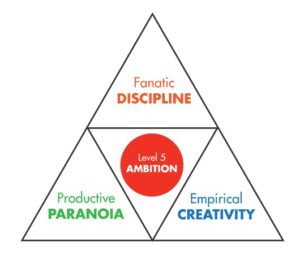
Figure 1: What does it take to be a 10Xer (*source/link: https://www.embracepossibility.com/blog/great-by-choice-jim-collins/)
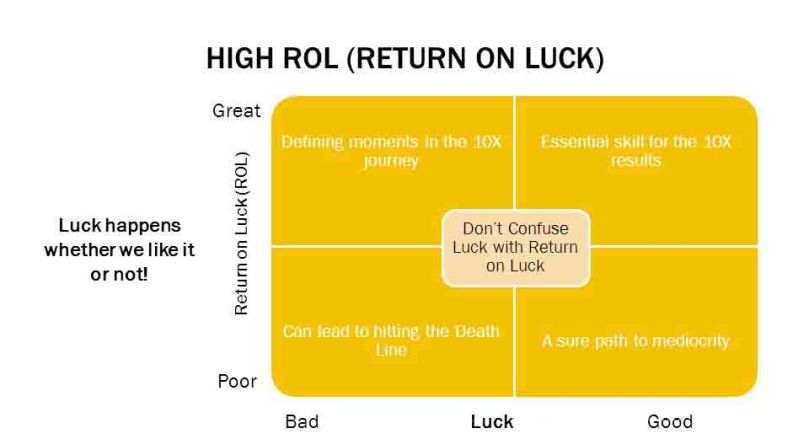
Figure 2: Luck vs Return on Luck (*source/link: http://slideplayer.com/slide/3886149/)
(The reader may buy the book from Amazon. Link: https://www.amazon.com/Great-Choice-Uncertainty-Luck-Why-Despite/dp/0062120999)
 kanadpankajjha.com